


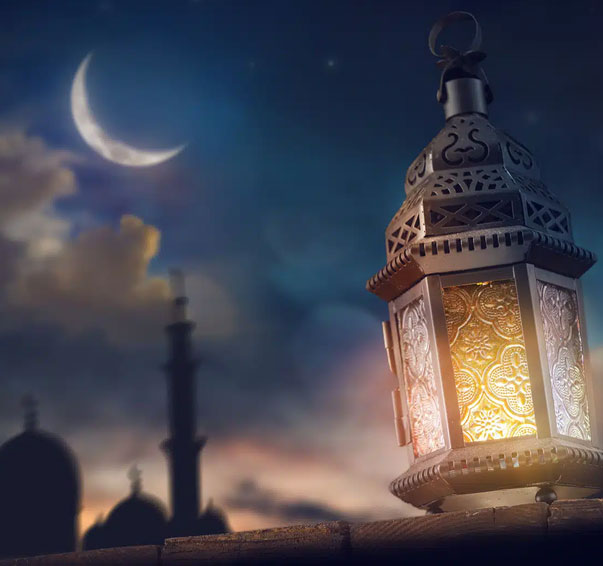
What is Ramadan? Most Muslims will, rightly state that it is a lunar calendar month when Muslims fast from sunrise to sunset. Why? They restrict even what is permissible to them during daylight hours to show their obedience to Allah SWT. Some might also add that it is the holy month when the Quran descended to the lower level of heaven, and the Prophet first began to receive guidance. As a result of the associated history, Ramadan is meant to be a time of joy and celebration. The truth is, as a Muslim working in the west, I struggle more than celebrate.
The ugly details include waking up around 4 am, eating and drinking, praying and then deciding whether to sleep or wake until you have to get up for a full day of school and activities. Repeat for thirty more days. There is no way that you do not feel drained, stretched or tired at some point.
So why choose to do this? Ironically, it is to feel this very feeling of fatigue and overwhelm. The physical experiences of hunger and sleep deprivation remind us of our human vulnerability. Without it, we fully appreciate our dependence on food, sleep and caffeine. The experience makes us realize how susceptible we truly are. As opposed to Allah SWT. In Ayat-Ul-Kursi, we are reminded that “Neither drowsiness nor sleep overtakes Him.” Allah SWT is vastly superior to us and not reliant on anything.
The cumulative experience makes us realize that we are not “Masters of our Universe.” The small deprivations translate into some amount of compromise. We miss meetings, appointments and get the occasional parking ticket. It is inevitable. We are not perfect and we get to experience our imperfection. In Ramadan, I don’t get mad at myself like I normally would. I give myself grace. “It’s Ramadan” I say and shrug. Letting my mistake fall away with the drop of my shoulders. Ordinarily, I would ruminate and berate, ruminate and berate some more. In Ramadan, I am a little kinder to myself and I’m not sure any other experience would force me to do this. Ideally, even though we might be tired and cranky, we exercise patience towards others.
Personally, I lack the energy to voice my frustrations like I normally would. All in all, that’s a good thing.
In other words, we accommodate Ramadan, the minor inconveniences and the changes to schedule. These superficial adjustments also translate into deeper changes in priorities and perspectives. The word Ramadan means “intense heat or dryness”. The accompanying visual image depicts Earth as so dry and cracked that it would release a cloud of dust if stomped upon.
We enter this month after a full year of absorption in the world. We face the demands, the hardships, and the stress. We enter as dry, cracked soil and emerge more pliant and accepting. The visual metaphor is dry Earth that receives rainfall from the sky and transforms into mud and loam which is fertile and receptive.
Abu Musa narrated that The Prophet said,
“The example of guidance and knowledge with which Allah has sent me is like abundant rain falling on the earth, some of which was fertile soil that absorbed rainwater and brought forth vegetation and grass in abundance.
And another portion of it was hard and held the rainwater, and Allah benefited the people with it. They used it for drinking, for watering their animals, and for irrigating the land for cultivation.
And a portion of it was barren, which could neither hold the water nor bring forth vegetation.
The first is the example of the person who comprehends Allah’s religion and gets benefit.
The last example is that of a person who does not care for it and does not take Allah’s guidance revealed through me.”
Source: Sahih al-Bukhari, Hadith 79 and Sahih Muslim, Hadith 2282.
The different kinds of land represent the different kinds of Muslims. Ramadan is our time of intense “irrigation,” and it is up to us how we will emerge. The same untouched land, or transformed into a bounteous garden of plants and vegetation.
Ramadan is organized into three distinct parts. Traditionally, the first ten nights are the days of Mercy, the second Forgiveness and the Third is focused on salvation from the fire. It is no coincidence that the phases of our lives can also be divided into youth, adulthood and old age. The way we feel time during Ramadan mirrors these phases as well. The first 10 days require adjustment and they tend to be the slowest part. In the middle, most have found their stride. A new routine has emerged and things begin to feel easier. This is the time when we are able to focus our energy on other demands like self reflection. The Denoument always happens in the blink of an eye. Most are busy with a time of intense prayer and Eid preparations. Much like life, it is a roller coaster, a slow rise, a halt at the peak and a rapid descent. Similarly, we build, spread out and then recognize that the end is near and try to prepare for the next stage.
In the first third of Ramadan, we focus on Mercy, which is God’s bounty. In the beginning of Ramadan when our bodies are adapting to the new restrictions imposed on it, you are forced to be efficient. When you have limited time to eat and drink, you want to make sure that you get the most “bang for your buck”. It is time to take stock of your priorities and decide where to allocate the limited resources you have. The unimportant and irrelevant naturally filter away.
The second portion focuses on forgiveness. Ideally, you accept responsibility for your wrongdoings and you absolve the perceived wrongdoings of others. You have time to think about our impact on others and the impact of others upon you. It is a time of restful reflection. Freed from the demands of digestion, our bodies also can focus on cellular repair. It is a time to relinquish any grudges or anger we are holding onto. Like the Hadith in which sins are likened to a black mark on the heart. We should strive to forgive to the extent that the transgression never took place. We rid ourselves of any residual rancor. We practice this towards others and hope that Allah will mete us the same.
In the last portion, which is definitely the most intense one prepares for the future. For Muslims this means prayers for salvation from the fire. At this point, the accumulated sleep deprivation and dehydration make it the most intense part of Ramadan and as a result, the part in which Muslims work the hardest. As we near the end, it makes sense to think about what changes we will make in our prioritization of time and actions when we finish Ramadan. It is a time to determine what your focus and goals will be for the upcoming year. This reshuffling most likely includes actions that will also save us from the fire. We might choose to spend our time differently, or patch up relationships or make improvements in other defects in our character.
Our festive Eid celebrations mark re-emergence. This marks our return to the world after our reassessments and renewals.
We emerge like a glorious sun, strong and powerful, in all of our radiant apparel and all the best food that we can summon.
Eid is our Great Celebration, and it is celebrated like the scene of Jannah in Surah Insan.
“Indeed, the virtuous will have drink of pure wine flavored with camphor…There, they will be reclining on ‘canopied’ couches, never seeing scorching heat or bitter cold. In the Garden’s shade will be right above them, and its fruit will be made very easy to reach.
They will be waited on with silver vessels and cups of crystal, crystalline silver filled precisely as desired. And they will be given a drink of ‘pure wine’ flavored with ginger from a spring there, called Salsabil. They will be waited on by eternal youths. If you saw them, you would think they were scattered pearls.
And if you looked around, you would see ‘indescribable’ bliss and a vast kingdom. The virtuous will be ‘dressed’ in garments of fine green silk and rich brocade, and adorned with bracelets of silver, and their Lord will give them a purifying drink. And they will be told, “All this is surely a reward for you. Your striving has been appreciated.”
On this day, we seek the best company and the best food and drink. It is an indescribable feeling. On that day, you feel superhuman simply because you are able to eat and drink when you feel like it. My husband and I have a ritual of having a nice cup of coffee after Eid prayers. No matter where we go or what we order, it is hands down, the best sip of coffee of the year.
It is meant to be this way. Allah SWT knows that it is only through some deprivation that we appreciate the quotidien blessings that we become immune to. Like snakes molting out of hardened, restrictive skin, we too emerge with a new vulnerability and an appreciation for simple pleasures.
In the same vein, Ramadan forces us to pay attention to the things that we see everyday, but may not ponder upon. All Muslims who fast become keenly aware of sunrise and sunset. Some experience the perfect still of the Earth in the middle of the night. It is a time when you can feel that you are really alone with your God. A time of reflection and calm transformation. When we are less focused on the physical demands of our bodies, our attention lands upon the spiritual. During Ramadan, I experienc things that I don’t normally and even some that are completely new to me. I’m not naturally an early riser, so it is the time of year that I get to experience the sunrise. Even if you think you are familiar with this, you may not be. People who fast arise well before the sun is at the horizon. We start our fast when the sun first begins to move and we get to watch every second of its emergence. I am blessed to live in a home with East and West facing views, so I get to fully appreciate the sunrise and the sunset. It doesn’t take much to observe the connection between the movements of the Sun and birth and death. The same applies to the actions of the moon over a month. We watch the moon, wax to a peak and then wane. Eventually it fully disappears and then is born again. It is this senescence and reapparance that marks the transitions of the months on a lunar calendar.
Ramadan is a lunar month. Within each Ramadan, our goal is to reflect upon what we would like to shed and what we would like to grow. We make an effort to incorporate and feed the positivity, hoping that the balance will shift towards the good. We feel the dichotomy of emerging physically drained, but mentally and emotionally renewed. Allah SWT intends to show us the disparity between these things. What is physical and concrete like the world around us is transient and fickle. It will and does readily change. However, the spiritual, psychological and emotional can endure longer and can be totally distinct from our physical experience. We can find ourselves surrounded by physical luxury, but devoid of contentment or we might find ourselves struggling externally, but be internally satiated.
Ideally, we emerge on Eid ready to implement change. The month of reflection allows us to recognize the changes in our priorities. This might manifest as visible changes in our external lives or changes that are completely internalized and part of our thoughts or emotions, therefore not visible at all. Whatever the case may be in your individual experience. It is just that. An experience that moves us towards self improvement, which means improvement for all.